A preform spec sheet is short, but three numbers carry most of the quality story: intrinsic viscosity, acetaldehyde and weight tolerance.
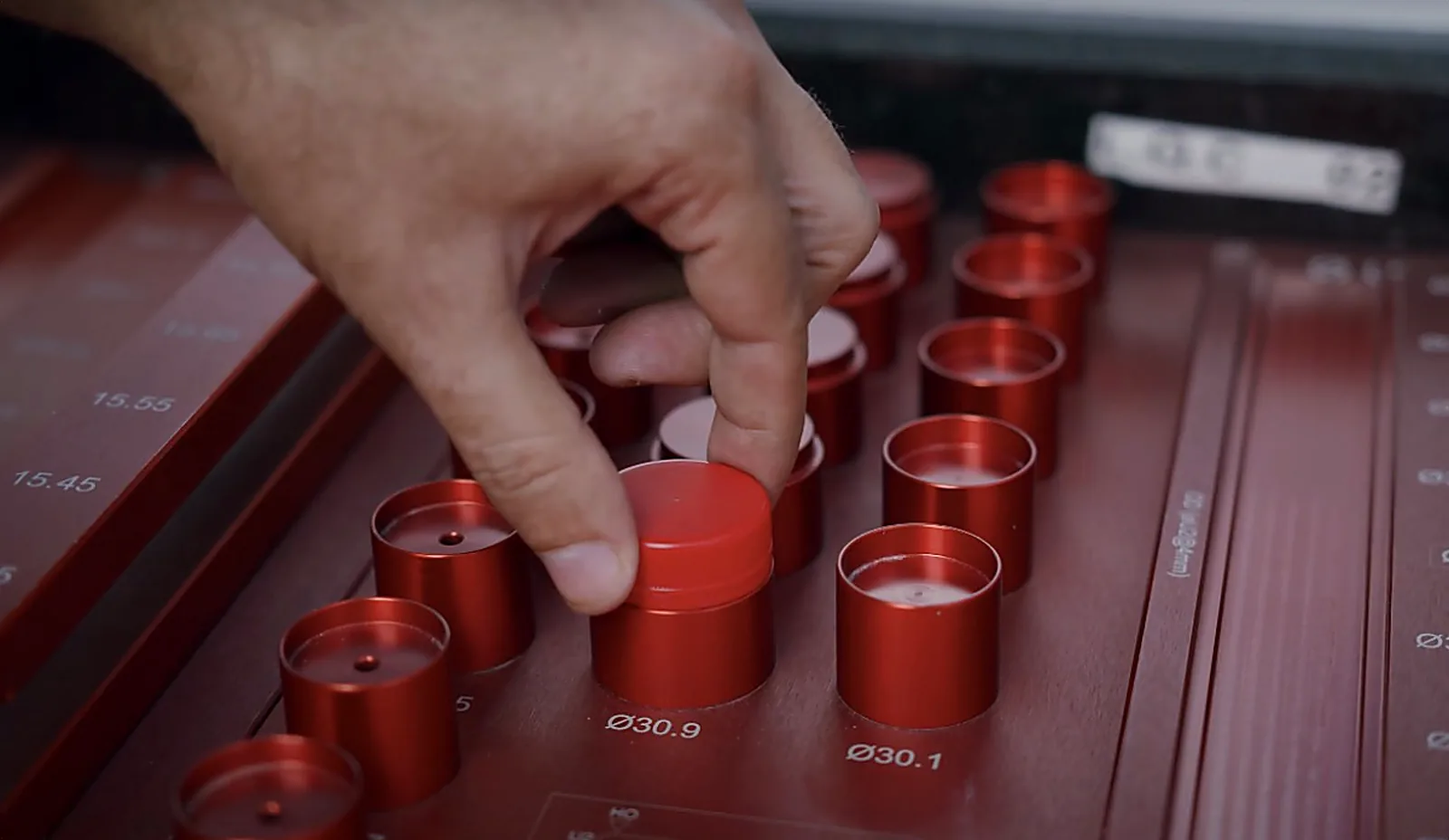
Calibrated neck-finish gauges in our QC lab, used to check preform neck dimensions. More about our plant →
IV — intrinsic viscosity
IV (dl/g) reflects polymer chain length and therefore strength. Water and juice grades run ~0.76–0.80; oil, CSD and 5-gallon grades use a higher ~0.84+ for pressure and top-load. Too low and the bottle is weak; too high and it is hard to process.
AA — acetaldehyde
AA is a trace processing by-product that can taint sensitive contents. Water grades target a low AA (< ~6 ppm); a controlled drying and melt history keeps it down — critical for still water taste.
Weight tolerance
The ± gram tolerance keeps stretch ratios and wall thickness consistent bottle-to-bottle. Tight tolerance is what makes a blow line stable.
What is IV (intrinsic viscosity) on a PET preform spec?
IV (dl/g) reflects polymer chain length and therefore strength. Water and juice grades run about 0.76–0.80; oil, CSD and 5-gallon grades use a higher ~0.84+ for pressure and weight.
What is acetaldehyde (AA) on a preform spec sheet?
AA is a trace processing by-product that can taint sensitive contents like water. Water grades target a low AA (under ~6 ppm), held down by controlled drying and melt history.
Why does preform weight tolerance matter?
The ± gram tolerance keeps stretch ratios and wall thickness consistent bottle-to-bottle — tight tolerance is what makes a blow line stable.
What IV and AA does Delta El Nile hold?
Water/juice/dairy grades run IV ~0.76–0.80 dl/g with low AA; oil, CSD and 5-gallon grades run IV ~0.84+ dl/g. Exact IV/AA and weight tolerance are listed per SKU.
Ready to specify?
Find your exact SKU and build an audit-ready RFQ in minutes.